
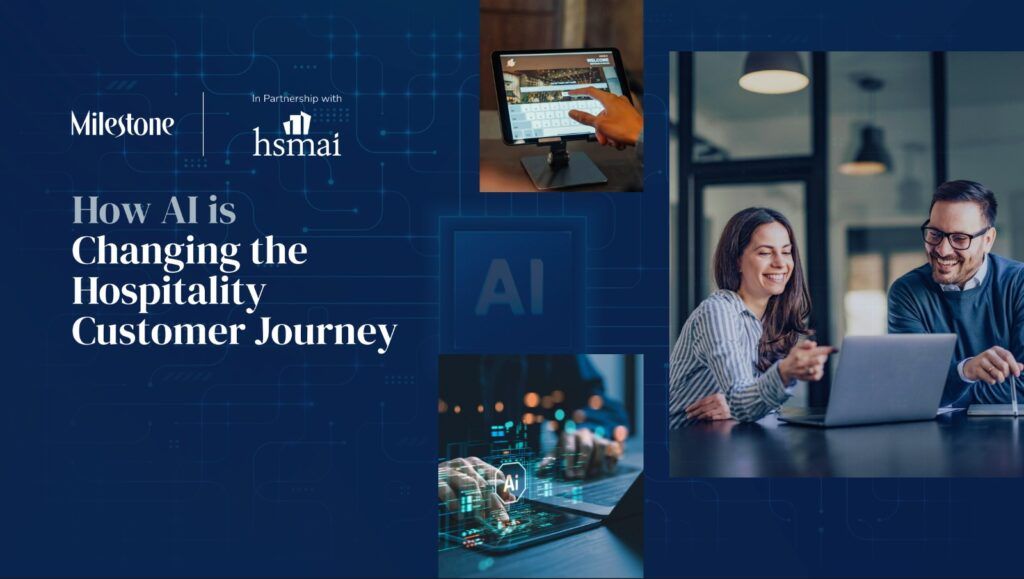
The material is available free of charge and addresses the digital strategies that the hotel industry needs to implement in the coming years.
HSMAI, a global association dedicated to the development of executives and professionals in the hospitality and tourism industry focused on Sales, RM, Distribution and Marketing, in collaboration with Milestone Inc., launched the eBook “How AI is Changing the Hospitality Customer Journey”, A guide showing how Artificial Intelligence (AI) is redefining the way hotels interact with guests, from brand discovery to booking and loyalty. The complete material is free and can be accessed. HERE.
The publication notes that by 2026, half of global search traffic will be generated by AI-powered search engines such as ChatGPT, Google AI Overviews, and Bing Copilot. This shift represents a new paradigm for the hotel industry, where visibility on AI platforms replaces traditional SEO. “Before, we said that if a company wasn't on Google, it didn't exist. Today, brands need to appear as a result in AI searches to be considered by customers,” explains Gabriela Otto, president of HSMAI Brazil and Latin America.
The ebook also addresses the New Digital Paradigm, In this context, the guest experience becomes conversational and personalized, with AI shortening the decision-making cycle and demanding immediate and relevant responses. This gives rise to the concept of Generative Engine Optimization (GEO), an evolution of traditional SEO that ensures hotels appear in the results generated by AI systems.
AI agents play a vital role throughout the entire customer journey, offering personalized recommendations, processing bookings, and efficiently managing loyalty programs. Personalization and trust become central pillars of this transformation: AI enables digital experiences tailored to each guest's profile, while data governance ensures transparency and strengthens the brand-customer relationship.
Another highlight is the Content Flywheel, a continuous system for creating and optimizing content that allows you to reduce costs by up to 95% and significantly increase the digital visibility of hotels.
The material also presents success stories that reinforce the positive impact of these strategies. One outdoor hospitality brand, for example, increased its conversions by 561,000 and saved $574,000 in operating costs by implementing AI agents. Another hotel group reduced its website optimization time from 10 hours to just 90 minutes, increasing organic traffic and direct bookings.
Finally, the ebook highlights the importance of Digital Future-Proofing, proposing the adoption of “AI-native” platforms that integrate data, content, and automation into a single ecosystem. This approach simplifies operations, enhances results, and prepares hotels to compete efficiently in the new digital era driven by Artificial Intelligence.
“The future of the hotel industry is being shaped by AI. Brands that can train their teams to adapt their digital strategies, optimize content, automate interactions, and prioritize personalization will be the ones to lead the new era of guest experience,” Gabriela concludes.