
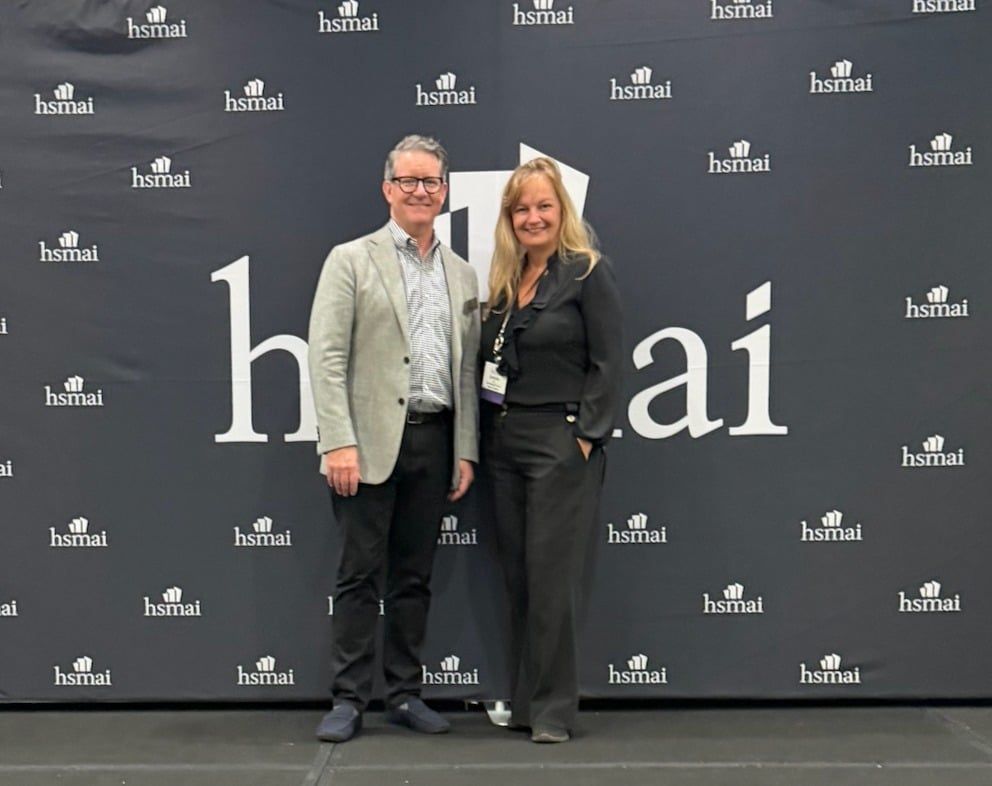
The event brought together Heads and Board members from across the Americas to discuss ongoing disruptions, new market demands, and the strategic role of hospitality.
HSMAI (Hospitality Sales & Marketing Association International), a global association dedicated to the development of executives and professionals in the hospitality and tourism industry focused on Sales, Revenue Management, Distribution and Marketing, held the HSMAI Leadership Conference in March in Los Angeles (California), bringing together global executives and specialists (only Heads of chapters from the Americas and board members) to discuss the main challenges and opportunities of hotel leadership in a scenario of constant transformation.
Latin America was represented by Gabriela Otto, president of HSMAI Brazil and Latam, who closely followed the debates and trends presented.
One of the main insights from the meeting was shared by Brian Hicks, CEO of HSMAI Global, who highlighted that the hospitality industry is not facing a single change, but a continuous disruption, driven by factors such as technology, workforce transformation, new guest expectations, and economic and operational pressures.
“The challenge isn’t technological, it’s one of leadership. The hotel industry doesn’t need those who react to change, but those who anticipate it clearly. In the next five years, it won’t be their repertoire that differentiates leaders, but their ability to make consistent decisions amidst complexity,” Brian stated.
Other highlights of the event included:
· Leadership requires clarity: an essential competency for the new generation of leaders. In this context, HSMAI reinforced its positioning as “the home of the modern business leader”, promoting a global community capable of collaboratively navigating the challenges of the future;
· Current leadership challengesTechnological disruption, rising traveler expectations, labor shortages, economic uncertainties, and pressure for results are all part of the current scenario. Data presented indicates, for example, that 771% of leaders feel overburdened (201% perform 801% of the work), while only 491% claim to clearly understand their companies' strategic priorities, reflecting the need for more aligned and communicative leadership;
· Connection, communication and collaborationThese are the fundamental pillars for leading more intelligently. This was highlighted by Alain Hunkins, a leadership specialist and Forbes contributor, in his presentation. He emphasized that leadership is behavior, not position, and that aligned teams outperform talented but disorganized teams.;
· Hospitality as a competitive advantageCustomer experience is now measured not only by satisfaction, but also by the emotion and connection generated throughout the journey. Technical excellence without human warmth becomes a commodity, while small gestures have the power to create lasting memories. Consistency was also highlighted as more important than isolated actions, reinforcing the importance of an organizational culture based on repeated, daily behaviors.
According to the president of the organization in Brazil and Latin America, effective leadership today "involves reducing human friction to accelerate results, which requires active listening, clarity in communication, and environments that encourage real collaboration, even with room for constructive disagreements.".
Furthermore, the key differentiator in the hotel industry lies in how people feel during their stay. “True hospitality goes beyond service and becomes connection. That is the path to generating value, loyalty, and sustainable results for the sector,” Gabriela concluded.